The Integration Module is out of beta. Version 2.0 adds a change history of integration settings, search in the Admin language, new categories, and rewritten documentation.

We introduced the Integration Module at the end of July. In four months it was downloaded from npm almost 12,000 times, and more than 60 production stores in North America, Europe, the CIS, Brazil, and India now manage their plugin settings with it in Medusa Admin.
Community developers have connected more than 50 integrations of their own through the module, among them Mercado Pago, Razorpay, Shiprocket, Melhor Envio, Klaviyo, Meilisearch, Twilio, WhatsApp, Ozon, CDEK, and Yandex Pay. And one store configures as many as 18 providers through the module!
The catalog now lists 12 published plugins built on the module, covering payments, shipping, ERP, analytics, and marketplaces. Two of them, Meta Commerce and Product Feeds, come from third-party developers. Browse all of them in the catalog.
Today the module leaves beta with the stable 2.0 release.
Watch the demo to see how the module works:
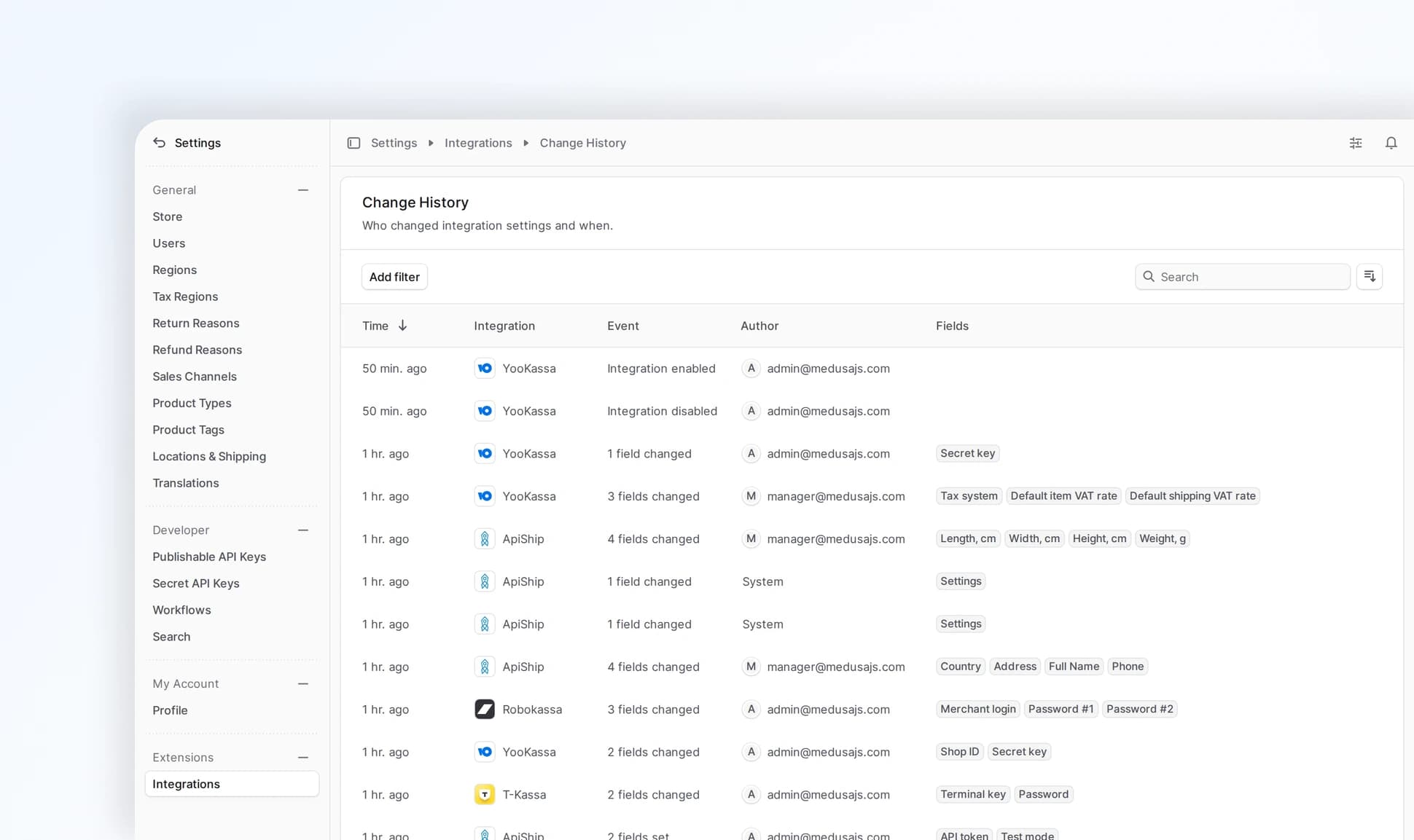
Once settings change in Admin and not in code, their changes no longer have a commit history. After a payment or a delivery fails, the first question is who changed what. The module now answers it.
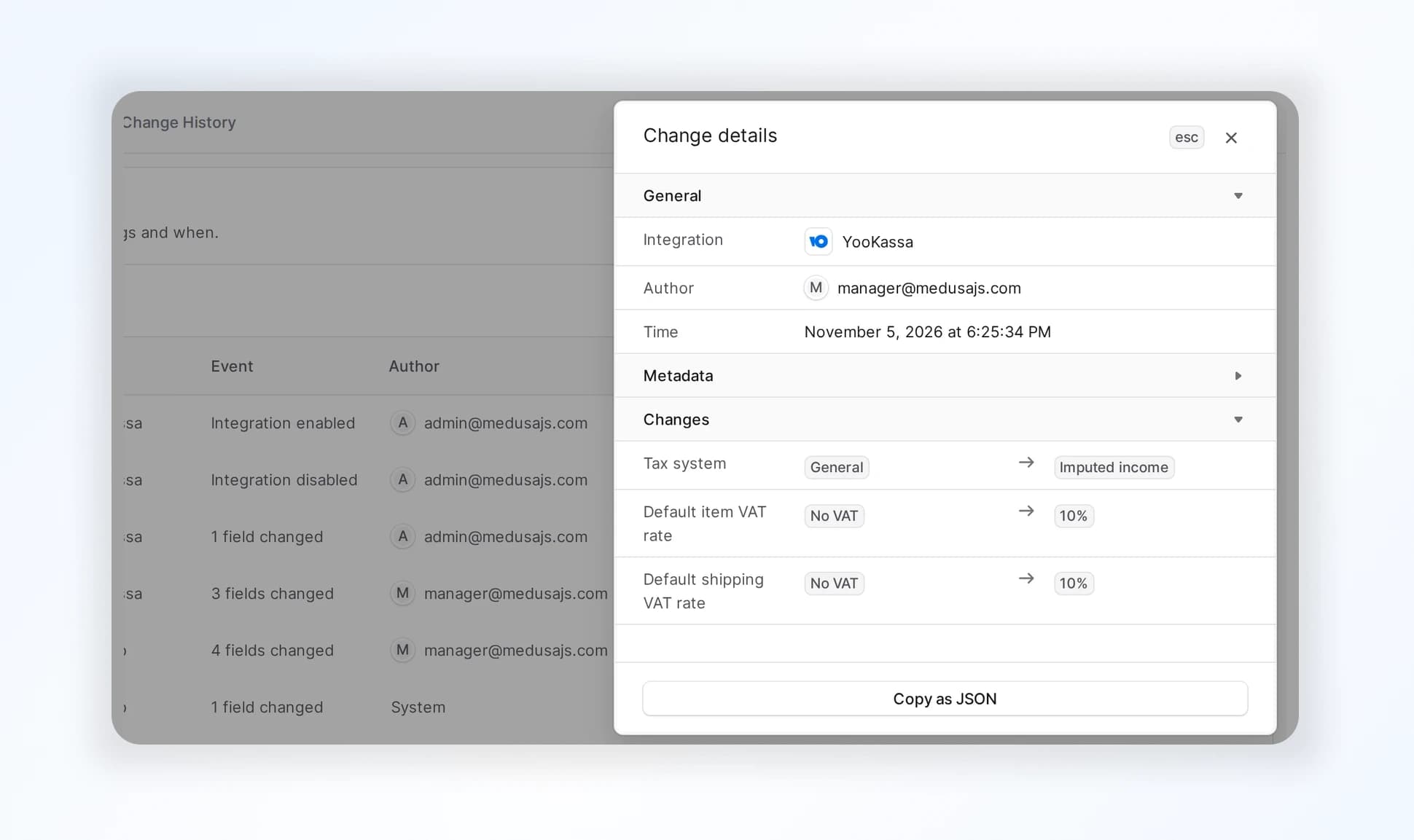
It records every change to an integration's settings with the author, the time, and each field's value before and after. Secret values never reach the history. For a secret, the module keeps only the event.
Watch the demo to see how it looks in Admin:
The Change History page lists the changes of every integration. You can search it by author, integration, or changed field, filter and sort it, and share a link to the filtered list.
A change opens in a side panel with every field as "before → after" and a Copy as JSON button.
The module keeps the history indefinitely, and it outlives the integration it describes. Refer to Settings Change History for what the module records, and to View the Change History in Medusa Admin for the Admin.
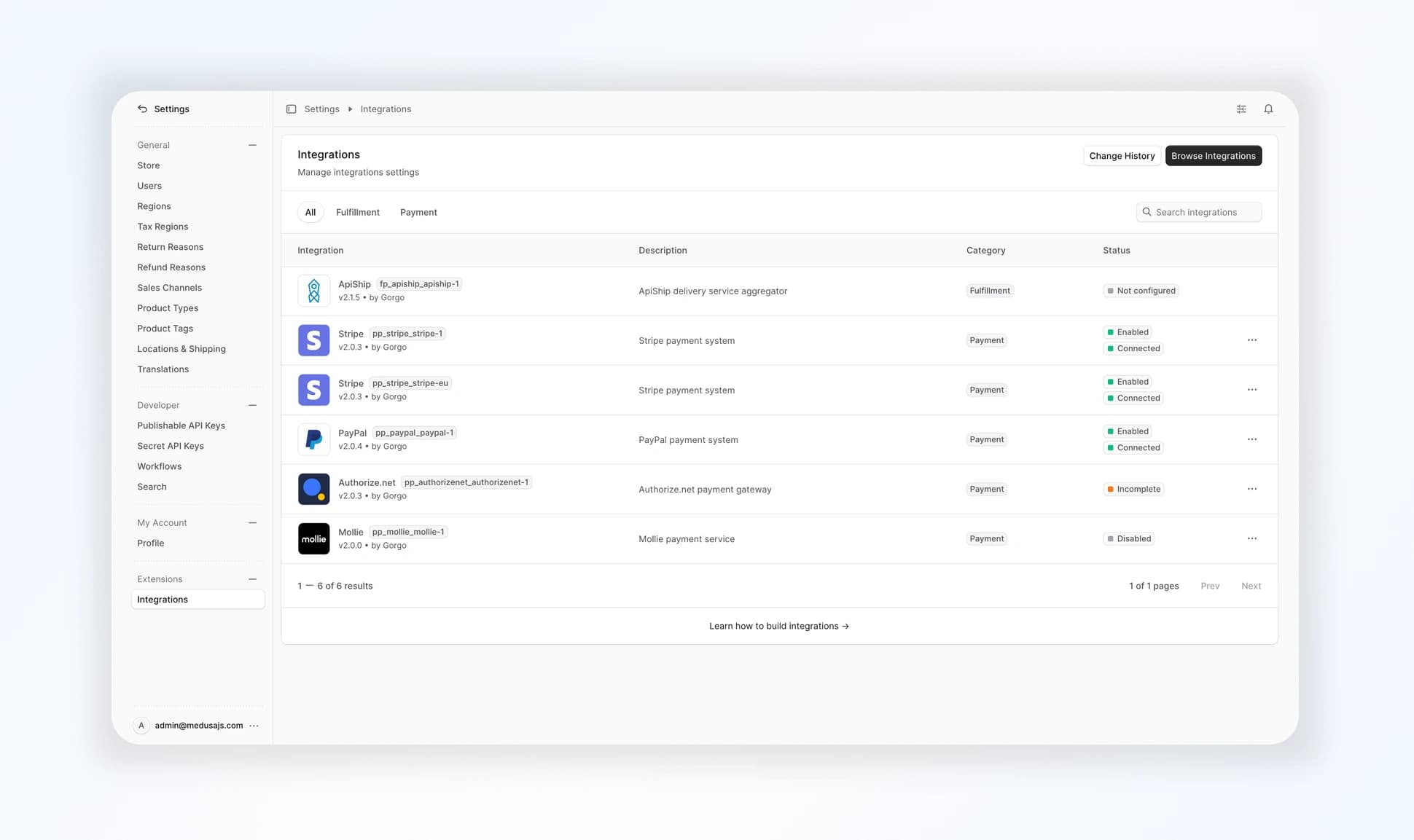
The module moves from 0.3 straight to 2.0 and takes the same major version as Medusa v2 and the Gorgo payment and fulfillment integrations. Every Gorgo integration released today requires , so the version numbers say what works together.
Update the module together with the Gorgo integrations your project uses, then run the migrations:
The module reads the settings and secrets saved on 0.3 as before. The upgrade guide lists the compatible versions of every integration and the steps for a project with its own code on top of the module.
We keep building new integrations and maintaining the ones already released. We run the tests every night, check compatibility with new Medusa versions every day, and fix a critical bug in a separate patch release. The maintenance page describes how it works.
Integration Module 2.0 is available on npm today. If you're building a Medusa plugin, start with the guide to creating a provider.
Join the discussion in the Medusa Telegram community. Issues and pull requests are welcome in the repository on GitHub.
1yarn add @gorgo/medusa-integration@^2.0.0 @gorgo/medusa-payment-stripe@^2.1.02npx medusa db:migrate